Coming Soon!
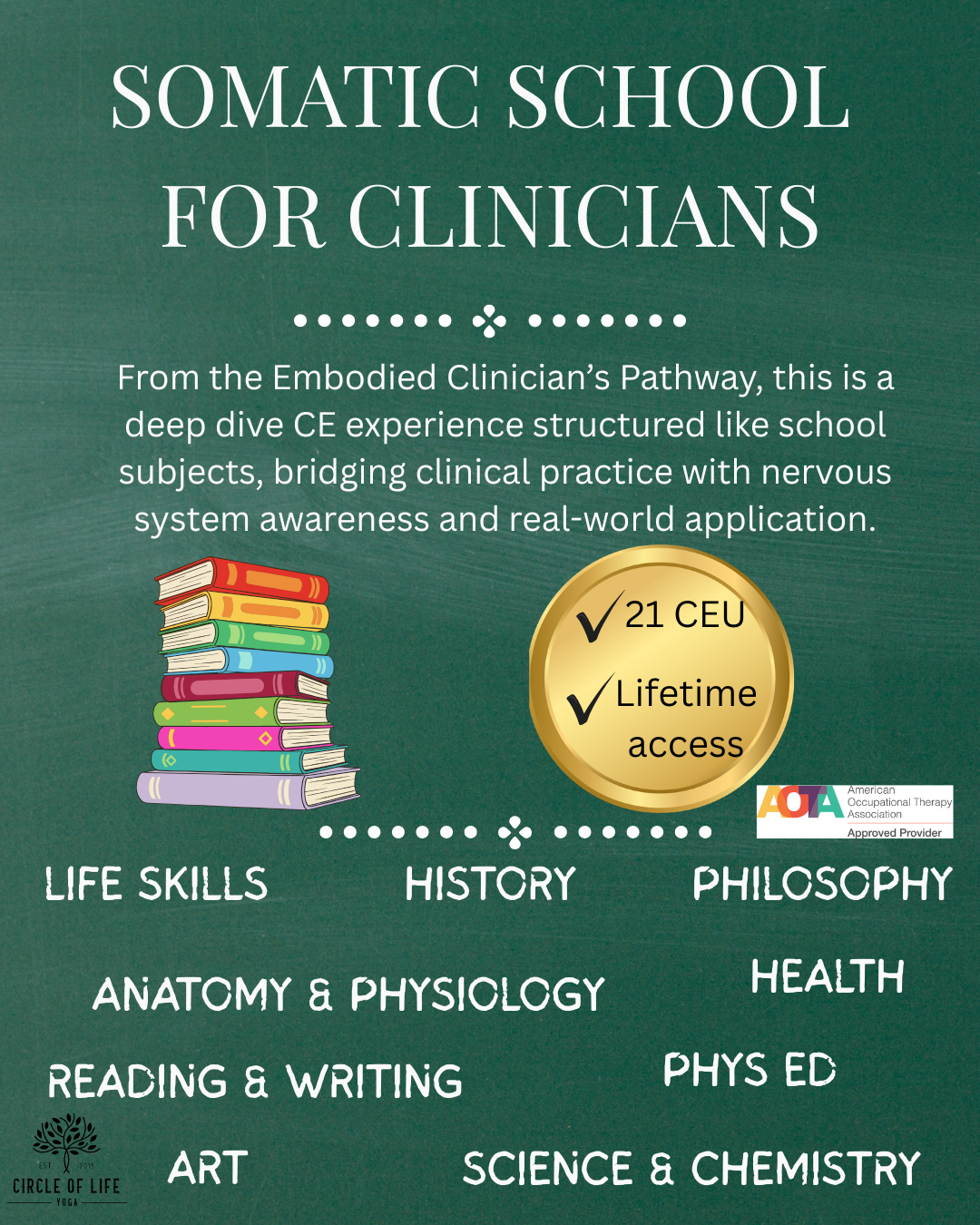
Health - understand how trauma and triggers shape the nervous system, explore how experiences are stored in the body, and build awareness of sensations, energy, and regulation tools to support healing and resilience.
History - explore how inherited trauma, family dynamics, and cultural history shape patterns and behaviors, while identifying strengths and creating opportunities to break generational cycles.
Anatomy & Physiology - analyze how breath, nervous system function, and body structure influence alignment, movement, and tension patterns, while developing embodied awareness through practical application.
Science & Chemistry - examine how the senses, sound, and vibration impact the nervous system through pre-recorded, guided experience labs—bringing learning to life with immersive, at-home application.
Philosophy - learn the roots and evolution of yoga while integrating ethical practices, awareness, and modern perspectives to better understand consciousness, human behavior, and the path from suffering toward freedom.
Life Skills - develop practical tools for emotional intelligence, communication, and resilience while strengthening self-compassion and healthier inner dialogue.
Reading & Writing - engage in reflective writing practices using guided prompts, story mapping, and personal inventory work to deepen self-awareness and insight.
Art - create and express personal intentions through goal setting, creative manifestation, and reflection that honors progress and celebrates achievement.
Physical Education - practice applied movement and somatic awareness through guided, safe, functional sequences supported by instructional videos and curated playlists to enhance embodiment and integration.
✔ Lifetime access
✔ 21 CEUs
✔ Certification upon completion
Learning Objectives
-
Analyze how nervous system states, trauma responses, and sensory processing patterns influence occupational performance, engagement, and participation in activities of daily living (ADL’s), instrumental activities of daily living (IADL’s), work, education, and social participation.
-
Identify and differentiate signs of dysregulation in clinical populations by interpreting behavioral, sensory, emotional, and physiological presentations within case study scenarios.
-
Demonstrate application of somatic-based regulation strategies (e.g., breath awareness, grounding, sensory modulation, and movement-based techniques) within simulated clinical case studies to support improved client engagement and participation.
-
Integrate trauma-informed communication and therapeutic use of self strategies to improve clinical interactions, enhance safety, and support effective client participation in occupation-based interventions.
-
Evaluate and apply foundational concepts from neuroscience, anatomy and physiology, and interoception research to inform clinical reasoning and intervention planning within occupational therapy practice settings.
-
Reflect on and assess personal clinical responses, regulation patterns, and professional behaviors through structured reflective exercises to improve therapeutic presence, reduce burnout risk, and support sustainable practice.